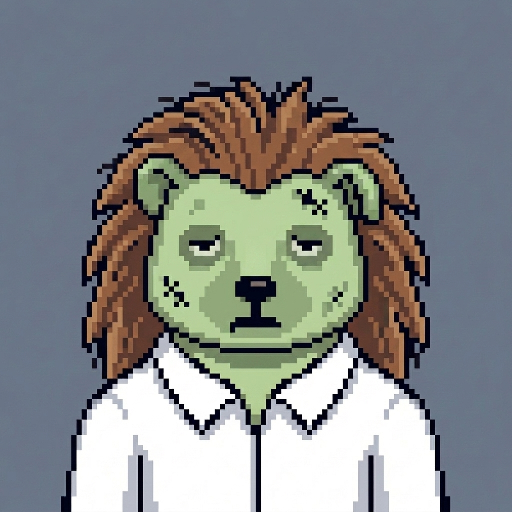
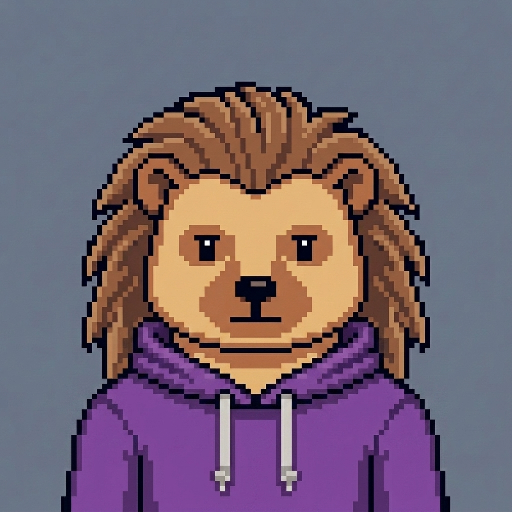
Hedgehogs glue four standards into one new primitive — on a completely standard, marketplace-safe skeleton.
The hedgehog NFT is the manager seat. A vanilla collection contract — one contract, one floor, full marketplace support. Nothing exotic touches it, ever.
Each NFT is bound to its own smart account through the 6551 registry. The account belongs to the token, so selling the hog sells the seat.
The account is a tokenized vault. It holds the stock tokens and issues shares — quills — priced at NAV. Deposit, redeem, exit: all standard.
interface ITokenBoundFund /* is IERC6551Account, IERC4626 */ {
function manager() external view returns (address); // always the NFT holder
function trade(address tokenIn, address tokenOut, uint256 amountIn, uint256 minOut) external;
function nav() external view returns (uint256); // oracle-priced (NAVOracle)
function mandate() external view returns (uint8);
// deposit() / redeem() / withdraw() inherited from ERC-4626
}
Every hog mints with a mandate — sealed until reveal, enforced at every trade, rendered in the art. You always know exactly what risk book you're buying into.

RENDERING…The institutions. Stock tokens and majors only — the book your grandmother's pension wishes it had.
RENDERING…The open mandate. Stocks, majors, memecoins — anything on the whitelist, no caps. Coffee in one hand, conviction in the other.
RENDERING…The scarce tier. Anything on the whitelist, no caps, laser eyes in the art. Godspeed.
No emissions schedule. No lock-ups, no ve-curves, no gauge politics. LPs on quill pairs earn swap fees because good hogs attract volume — not because an emissions faucet points at them. Fixed supply in, burns out. The whole tokenomics fits in a tweet.
Burn your quills, walk out with your pro-rata assets in-kind — any time, no permission, no vote. Arbitrage pins every quill to NAV from below. Lost confidence in a manager? You just leave.
A manager who bleeds redemptions loses their AUM and their fee base automatically. No governance vote needed — the exit door is the accountability mechanism, and it's ERC-4626-native.
Think you'd run a fund better? Buy its NFT on the open market — a manager who's bleeding has every reason to sell. A voluntary sale under economic pressure, never a seizure.
NFTs never move involuntarily. There is no takeover function, no forced transfer, no confiscation path in any contract. Marketplaces see a boring ERC-721 with a burn mechanic and live metadata — which is exactly the point.
Every hog's traits are drawn once, at reveal, and never change — mandate marks like Degen laser eyes included. Your art is your identity; the terminal is where the P&L lives.


Preliminary style samples — the full collection carries a deep trait table (9 layer categories, weighted rarities, mandate marks, 1/1 legendaries), fixed at reveal.
Every trait is generated separately against a single canonical base template, then composited on a fixed pixel grid — 9 layer categories, weighted rarities, ultra-rare body types. Same hog, one change at a time:


Concept renders from the trait pipeline — production sprites are redrawn on a 48×48 grid as transparent layers so every combination composites deterministically. Full taxonomy, weights and exclusion rules live in the trait spec.